Showing posts sorted by relevance for query shadow. Sort by date Show all posts

12/18/2008

shadows

:::::::::::::::::::::::::::::::::::::::::::::::::::::::::::::::::::::::::::::::::::::::::::::::::::::


winter sunshine -
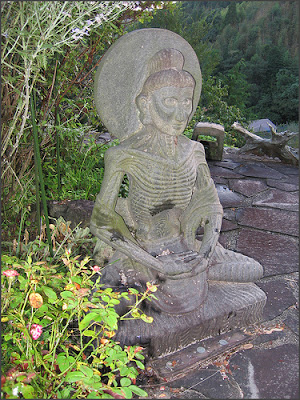
the shadows on my Buddha
grow older


this was yesterday

winter sunshine -
the slow growth of a stone's
shadow

. . . swinter sunshine -

:::::::::::::::::::::::::::::::::::::::::::::::::::::::::::::::::::::::::::::::::::::::::::::::::::::


I think most of you remember
my old stone Buddha sitting there in meditation


:::::::::::::::::::::::::::::::::::::::::::::::::::::::::::::::::::::::::::::::::::::::::::::::::::::


Discussion

A shadow growing older strikes me as conceptual, rather than perceptual.
B.


As I watch my Buddha I get older
and the shadow shares my fate with me ...
I am one with the shadow
Gabi


shadows change over time, am to noon, shorter and shorter, noon to sunset, longer.
winter to summer ever shorter, summer to winter ever longer
both perceptual as well as conceptual

I.K.


I like your ku as it is now. As you mentioned, a lengthening shadow isn't necessarily a kigo. Heck, my shadow lengthens and shortens all times of the year... though I prefer the taller one! LOL I have three stone monks in my backyard garden.... and I went just now to check their shadows... you indeed have a shasei here and one that is distilled in a wonderful way!
M.


:::::::::::::::::::::::::::::::::::::::::::::::::::::::::::::::::::::::::::::::::::::::::::::::::::::


. . . Read my Haiku Archives 2008


:::::::::::::::::::::::::::::::::::::::::::::::::::::::::::::::::::::::::::::::::::::::::::::::::::

11/17/2007

winter shadows


fields shadow


winter shadows -
my glass is still
half full


yellow shadows


cosmos flowers in sunshine and shade


:::::::::::::::::::::::::::::::::::::::::::::::::::::::::::::::::::::::::::::::::::::::::::::::::::::


After writing this haiku I checked a bit about Issa and his "lot in life"

My Life, my fate (mi no ue)

Take your time to explore Issa !


Read my SHADOW Haiku from 2007


Read my Haiku Archives 2007


:::::::::::::::::::::::::::::::::::::::::::::::::::::::::::::::::::::::::::::::::::::::::::::::::::

4/10/2009

shadow mandala


a star amongst
the white and pink -
shadow mandala


11 a star of shadows


:::::::::::::::::::::::::::::::::::::::::::::::::::::::::::::::::::::::::::::::::::::::::::::::::::::


MORE
My MANDALA Haiku


PHOTO ALBUM
Spring in my Garden


. . . Read my Haiku Archives 2009


:::::::::::::::::::::::::::::::::::::::::::::::::::::::::::::::::::::::::::::::::::::::::::::::::::

4/01/2010

apricot blossoms


06 apricots in light and shadow


daybreak - -
light and shadow
on the apricot blossoms


09 apricots above snow roof


10 detail on roof


11 nagayamon entrance door


:::::::::::::::::::::::::::::::::::::::::::::::::::::::::::::::::::::::::::::::::::::::::::::::::::::


Apricot blossoms (anzu no hana) KIGO


. . . Read my Haiku Archives 2010


:::::::::::::::::::::::::::::::::::::::::::::::::::::::::::::::::::::::::::::::::::::::::::::::::::

2/28/2008

diamond morning


morning meditation -
the short lifespan
of snow patterns


01 thursday morning light snow/ till number 22


day moon

04 day moon


light and shadow

12 light and shadow patterns


and
here is ME taking photos

15 Gabi taking photos


:::::::::::::::::::::::::::::::::::::::::::::::::::::::::::::::::::::::::::::::::::::::::::::::::::::


. . . Check my PHOTO ALBUM from here to nr. 22


. . . Read my Haiku Archives 2008


:::::::::::::::::::::::::::::::::::::::::::::::::::::::::::::::::::::::::::::::::::::::::::::::::::

8/09/2010

writers block


13 sunflower waiting END


every day
she waits patiently -
lady in the shadow


This is still early in the morning. Later she gets the full sunshine.


And here is her friend next-door

. LAVENDER
waiting for the morning sun


.................................................................................


The last line might also read

lady in shadow
lady in the shadows


:::::::::::::::::::::::::::::::::::::::::::::::::::::::::::::::::::::::::::::::::::::::::::::::::::::


. Sunflower (himawari)
KIGO


. . . Read my Haiku Archives 2010

:::::::::::::::::::::::::::::::::::::::::::::::::::::::::::::::::::::::::::::::::::::::::::::::::::

12/19/2009

our cat is ill

:::::::::::::::::::::::::::::::::::::::::::::::::::::::::::::::::::::::::::::::::::::::::::::::::::::


long cold night . . .
I play some Mozart
for my suffering cat


O-Tsu must have eaten some poison somewhere ... she came home around nine last night and started with terrible cramps and foam around her mouth ...
The cramps got worse, lasting about three minutes, every 30 minutes or so, she would stretch to almost double her length, then fold and bend to a tiny little ball, then tremble all over. Her breathing was fast and forceful, her pupils huge dark black circles ...

After a fit we would place her on the towel in a more comfortable position and watch her hard breath. Then the next fit distorted her small figure again ...

Around eight this morning, after a sleepless night, she had her last fit, then fell into a deep coma and we thought, well, this is it.

But after about one hour later, she opened her eyes again, this time here pupils were focused and she seemed a bit oriented and recognize us ... and then she becan to recover, sleeping most of the day.

Now (it is about six in the evening as I write this) she is still not oriented and whimpers a lot, but at least she has drunk some water and used her in-house toilet.

We hope she will recover more during this night.

Friday evening
Pray with us !


Saturday morning
Another night with watching over O-Tsu.
She is still afraid of all sounds and even her own shadow makes her shriek in fear and jump backwards. Finally she hides in a corner of the room and dozes off.

It was minus five degrees centigrade cold outside at night and we had to keep the house warm as best as we could.

This morning, at least she is oriented in the room and finds her place with the water, even jumps up on the table to drink.
This is going to be a slow process of recovering ...


Yakushi Nyorai Buddha of Healing


Saturday evening
What a day ! Cats are quite amazing.
O-Tsu spend most of the day sleeping (happily) in her bed, even licking her hair for a moment when she woke up.
Haiku-kun also finally relaxed (he had been quite upset with his mother's illness) and started snoring like usual.

We hope for a night to get some sleep!


Sunday morning
Sunshine !

A good night for all of us, and O-Tsu is now eating her food. She is still quite wobbely on her legs, but her sleep seems sound and her eyes are clear.
And her son Haiku kun has "talked" to her again, so it seems the cat family is fine again.


Cats in Paradise ..
O-Tsu and Haiku-Kun お津と俳句くん


:::::::::::::::::::::::::::::::::::::::::::::::::::::::::::::::::::::::::::::::::::::::::::::::::::::
:::::::::::::::::::::::::::::::::::::::::::::::::::::::::::::::::::::::::::::::::::::::::::::::::::::


Feburary 24, 2010

This morning, Haiku kun was standing in front of his cat entrance outside, crying with pain and in utter confusion ...

Then he started with the cramps ... now he is in the cat cage in stupor, it is lunchtime by now, and he is very ill, biting his tongue and dripping blood from his moth.
Seems the same poison as O-Tsu.

Evening
Haiku had some bad cramps, then calmed down for the day and had a lick of food in the evening (now), so I hope to see him back on his feet tomorrow.


:::::::::::::::::::::::::::::::::::::::::::::::::::::::::::::::::::::::::::::::::::::::::::::::::::::


. . . Read my Haiku Archives 2009


:::::::::::::::::::::::::::::::::::::::::::::::::::::::::::::::::::::::::::::::::::::::::::::::::::

8/24/2009

late evening sun

:::::::::::::::::::::::::::::::::::::::::::::::::::::::::::::::::::::::::::::::::::::::::::::::::::::


a butterfly
half in shadow -
late evening sun


:::::::::::::::::::::::::::::::::::::::::::::::::::::::::::::::::::::::::::::::::::::::::::::::::::::


. . . Read my Haiku Archives 2009


:::::::::::::::::::::::::::::::::::::::::::::::::::::::::::::::::::::::::::::::::::::::::::::::::::

8/11/2007

autumn sunset


watching the sunset
my long shadow
grows
lo
o
o
o
o
oonger


:::::::::::::::::::::::::::::::::::::::::::::::::::::::::::::::::::::::::::::::::::::::::::::::::::::


long, nagai 長

.........................................


some comments

GABI,

This haiku surprises me!
I thought you never deviate from a three line haiku?!!!
Good one!

.....

very interesting how you wrote the word longer!

.....

I like your sense of humour Gabi!
Works for me, and I usually don't care for concrete poetry. ( I think that's what it's called when you design with text) But this is easy to read and brings a smile... How long is this haiku 'moment'

.....

Reiterating: all haiku are haiku.

.....

Oh, this is delightful, Gabi... I love it!


.........................................

Effectively your visual disposition of the adjective "long" really fits the kanji transcription !

.........................................


Read my Haiku Archives 2007


:::::::::::::::::::::::::::::::::::::::::::::::::::::::::::::::::::::::::::::::::::::::::::::::::::

12/21/2008

solstice shadows

:::::::::::::::::::::::::::::::::::::::::::::::::::::::::::::::::::::::::::::::::::::::::::::::::::::


winter solstice -
the dark
growing darker


winter solstice -
dark shadows growing
darker


and a little later, with respect to some haiku friends of America


winter solstice -
a dark shadow grows
darker


HH December 2008


:::::::::::::::::::::::::::::::::::::::::::::::::::::::::::::::::::::::::::::::::::::::::::::::::::::

I Ching
Nr. 24 Fu - Return (The Turning Point)
Wendezeit

24. Fu - Return (The Turning Point)

-- --
-- -- above K'un The Receptive, Earth
-- --
-- --
-- -- below Chên The Arousing, Thunder
-----


The Judgement

Return. Success.
Going out and coming in without error.
Friends come without blame.
To and fro goes the way.
On the seventh day comes return.
It furthers one to have somewhere to go.


The Image

Thunder within the earth:
The image of the Turning Point.
Thus the kings of antiquity closed the passes
At the time of solstice.
Merchants and strangers did not go about,
And the ruler
Did not travel through the provinces.

The winter solstice has always been celebrated in China as the resting time of the year--a custom that survives in the time of rest observed at the new year.
In winter the life energy, symbolized by thunder, the Arousing, is still underground. Movement is just at its beginning; therefore it must be strengthened by rest so that it will not be dissipated by being used prematurely. This principle, i.e., of allowing energy that is renewing itself to be reinforced by rest, applies to all similar situations. The return of health after illness, the return of understanding after an estrangement: everything must be treated tenderly and with care at the beginning, so that the return may lead to a flowering.
source :  www.cfcl.com


The idea of a turning point arises from the fact that after the dark lines have pushed all of the light lines upward and out of the hexagram, another light line enters the hexagram from below. The time of darkness is past. The winter solstice brings the victory of light. This hexagram is linked with the eleventh month, the month of the solstice (December-January).

After a time of decay comes the turning point. The powerful light that has been banished returns. There is movement, but it is not brought about by force. The upper trigram K'un is characterized by devotion; thus the movement is natural, arising spontaneously. For this reason the transformation of the old becomes easy.
The old is discarded and the new is introduced. Both measures accord with the time; therefore no harm results.
Societies of people sharing the same views are formed. But since these groups come together in full public knowledge and are in harmony with the time, all selfish separatist tendencies are excluded, and no mistake is made.
The idea of RETURN is based on the course of nature. The movement is cyclic, and the course completes itself. Therefore it is not necessary to hasten anything artificially. Everything comes of itself at the appointed time. This is the meaning of heaven and earth.

All movements are accomplished in six stages, and the seventh brings return. Thus the winter solstice, with which the decline of the year begins, comes in the seventh month after the summer solstice; so too sunrise comes in the seventh double hour after sunset. Therefore seven is the number of the young light, and it arises when six, the number of the great darkness, is increased by one. In this way the state of rest gives place to movement.


THE LINES

Nine at the beginning means:
Return from a short distance.
No need for remorse.
Great good fortune.


Slight digressions from the good cannot be avoided, but one must turn back in time, before going too far. This is especially important in the development of character; every faintly evil thought must be put aside immediately, before it goes too far and takes root in the mind. Then there is no cause for remorse, and all goes well.


Six in the second place means:
Quiet return. Good fortune.

Return always calls for a decision and is an act of self-mastery. It is made easier if a man is in good company. If he can bring himself to put aside pride and follow the example of good men, good fortune results.


Six in the third place means:
Repeated return. Danger. No blame.

There are people of a certain inner instability who feel a constant urge to reverse themselves. There is danger in continually deserting the good because of uncontrolled desires, then turning back to it again because of a better resolution. However, since this does not lead to habituation in evil, a general inclination to overcome the defect is not wholly excluded/


Six in the fourth place means:
Walking in the midst of others,
One returns alone.


A man is in a society composed of inferior people, but is connected spiritually with a strong and good friend, and this makes him turn back alone. Although nothing is said of reward and punishment, this return is certainly favorable, for such a resolve to choose the good brings its own reward.


Six in the fifth place means:
Noblehearted return. No remorse.

When the time for return has come, a man should not take shelter in trivial excuses, but should look within and examine himself. And if he has done something wrong he should make a noblehearted resolve to confess his fault. No one will regret having taken this road.


Six at the top means:
Missing the return. Misfortune.
Misfortune from within and without.
If armies are set marching in this way,
One will in the end suffer a great defeat,
Disastrous for the ruler of the country.
For ten years
It will not be possible to attack again.


If a man misses the right time for return, he meets with misfortune. The misfortune has its inner cause in a wrong attitude toward the world. The misfortune coming upon him for without results from this wrong attitude.
What is pictured here is blind obstinacy and the judgment that is visited upon it.
source :  www.akirarabelais.com


:::::::::::::::::::::::::::::::::::::::::::::::::::::::::::::::::::::::::::::::::::::::::::::::::::::


American haiku poets questioning
the use of "simple statement kigo"


so my ansewer


are you happy
with your first line !?
this longest night


and D. replied

solstice night --
the longest line is
in the middle


HH December 2008


Wow, this one is so fresh, and something we can all relate to.
A few words that say a volume.

R.W.


:::::::::::::::::::::::::::::::::::::::::::::::::::::::::::::::::::::::::::::::::::::::::::::::::::::


My shadows from yesterday


. . . Read my Haiku Archives 2008


:::::::::::::::::::::::::::::::::::::::::::::::::::::::::::::::::::::::::::::::::::::::::::::::::::

4/10/2010

Sakura Hime


06 light and shadow and light


princess Sakura
in her sunday dress . . .
in my valley


:::::::::::::::::::::::::::::::::::::::::::::::::::::::::::::::::::::::::::::::::::::::::::::::::::::


. Hanami in my neighbourhood   


. . . Read my Haiku Archives 2010


:::::::::::::::::::::::::::::::::::::::::::::::::::::::::::::::::::::::::::::::::::::::::::::::::::

10/23/2009

shadows and silence


11 shadows of a tree


a long silence
between your words -
autumn deepens


:::::::::::::::::::::::::::::::::::::::::::::::::::::::::::::::::::::::::::::::::::::::::::::::::::::


green color code #767c6b "color of mountain doves"
山鳩色 (やまばといろ)


The trees, the flowers, the plants grow in silence.
The stars, the sun, the moon move in silence.
Silence gives us a new perspective.


Mother Teresa


autumn sunshine -
the sound of this shadow
on the wall


the sound of these
leaves on the temple wall -
autumn solitude


11 shadows of a tree


Thanks to Mother Teresa!


:::::::::::::::::::::::::::::::::::::::::::::::::::::::::::::::::::::::::::::::::::::::::::::::::::


A friend asked:
why not drop 'these' from L1 and move 'leaves" into it's place?

Well, here is my answer:

the sound of leaves
on the temple wall -
autumn solitude


the sound of these
leaves on the temple wall -
autumn solitude


Maybe you feel the difference yourself?

The sound of leaves, the sound of water ... quite a well used phrase in haiku ...
:o) ... maybe overused ...

Since it was not the sound of leaves (or rather maybe branches with leaves, for that matter) hitting the wall, but as is shown in the photo,
it was the sound of shadows, I want the reader to pause
these ... what ? simply leaves? only shadows? anything else ?

these leaves ... I can hear these leaves rustle in the wind, as the tree stands if front of the wall

leaves on the temple wall ... now they are only shadows, not the sound ...


So I choose the version I did.
HH


:::::::::::::::::::::::::::::::::::::::::::::::::::::::::::::::::::::::::::::::::::::::::::::::::::


. . . Read my Haiku Archives 2009


:::::::::::::::::::::::::::::::::::::::::::::::::::::::::::::::::::::::::::::::::::::::::::::::::::

11/14/2010

little crab


morning walk -
a little crab
stares at me


She was sitting in the middle of the road.
I picked her up
and put her in the shadow of some weeds.


:::::::::::::::::::::::::::::::::::::::::::::::::::::::::::::::::::::::::::::::::::::::::::::::::::::


. Crab (kani 蟹) : KIGO  


. . . Read my Haiku Archives 2010

:::::::::::::::::::::::::::::::::::::::::::::::::::::::::::::::::::::::::::::::::::::::::::::::::::

3/18/2011

spring sunshine


spring sunshine -
the light and shadow
of meltdown news


. Japan after the BIG earthquake .   


. . . . .


some photos from small blossoms in my neighbourhood

12 two blossoms
. Photo Album ... Start the Walk  


:::::::::::::::::::::::::::::::::::::::::::::::::::::::::::::::::::::::::::::::::::::::::::::::::::::

. . . Read my Haiku Archives 2011

:::::::::::::::::::::::::::::::::::::::::::::::::::::::::::::::::::::::::::::::::::::::::::::::::::

12/17/2008

sea of light

:::::::::::::::::::::::::::::::::::::::::::::::::::::::::::::::::::::::::::::::::::::::::::::::::::::


unkai 雲海 our sea of clouds


winter sunrise ...
the sea of clouds
turns sea of light


winter sunshine -
the crows wings turn
silver


winter sunshine -
the slow growth of a stone's

shadow


この石の陰の長さや冬ひさし


:::::::::::::::::::::::::::::::::::::::::::::::::::::::::::::::::::::::::::::::::::::::::::::::::::::


I have seen quite a few spectacular winter mornings here,
but this one shines above all of them.


And a leisurely day today with more haiku ...


More SHADOWS the next day ... LOOK !


. . . Read my Haiku Archives 2008


:::::::::::::::::::::::::::::::::::::::::::::::::::::::::::::::::::::::::::::::::::::::::::::::::::

3/02/2008

orange mist

:::::::::::::::::::::::::::::::::::::::::::::::::::::::::::::::::::::::::::::::::::::::::::::::::::::


early morning -
the shadow of pines
behind orange mist


:::::::::::::::::::::::::::::::::::::::::::::::::::::::::::::::::::::::::::::::::::::::::::::::::::::


. . . Read my Haiku Archives 2008


:::::::::::::::::::::::::::::::::::::::::::::::::::::::::::::::::::::::::::::::::::::::::::::::::::

12/14/2007

winter storm

:::::::::::::::::::::::::::::::::::::::::::::::::::::::::::::::::::::::::::::::::::::::::::::::::::::


winter storm -
the shadow of my windwheel
turns faster


We are in the warm kitchen, with a spotlight outside to brighten our dinner table vista!
And tonight it was spectacular.
First the old badger waggled his way along his footpath on the hill.
Then gusts of wind worked their miracle on the shadows.


:::::::::::::::::::::::::::::::::::::::::::::::::::::::::::::::::::::::::::::::::::::::::::::::::::::


Read my Haiku Archives 2007


:::::::::::::::::::::::::::::::::::::::::::::::::::::::::::::::::::::::::::::::::::::::::::::::::::

7/24/2008

WKD - Miyazawa Kenji

[ . BACK to WORLDKIGO . TOP . ]
::::::::::::::::::::::::::::::::::::::::::::::::::::::::::::::::::::::::::::::::::::::::::::::::::::: 


暑さにも負けず遍路の道長き


atsusa ni mo
makezu henro no
michi nagaki


not even yielding
to the great heat ...
pilgrim on the road


Today I visited a temple in Yamaguchi ... online of course ...

. . . 龍蔵寺 . . . Ryuzo-Ji


My daily duty walk along our rural memorial pilgrimage of Shikoku was really HOT, 36 degrees in the shadow ... atsusa ni mo makezu ... kept ringing in my mind all the way ... :o)


:::::::::::::::::::::::::::::::::::::::::::::::::::::::::::::::::::::::::::::::::::::::::::::::::::::


source : Tomikichiro Tokuriki 1902-1999


Miyazawa Kenji wrote this famous poem ...

ame ni mo makezu

ame ni mo makezu
kaze ni mo makezu
yuki ni mo natsu no atsusa ni mo makenu

jōbu na karada wo mochi
yoku wa naku
kesshite ikarazu
itsu mo shizuka ni waratte iru
ichi nichi ni genmai yon gō to
miso to sukoshi no yasai wo tabe
arayuru koto wo
jibun wo kanjō ni irezu ni
yoku mikiki shi wakari
soshite wasurezu
nohara no matsu no hayashi no kage no
chiisa na kayabuki no koya ni ite
higashi ni byōki no kodomo areba
itte kanbyō shite yari
nishi ni tsukareta haha areba
itte sono ine no taba wo oi
minami ni shinisō na hito areba
itte kowagaranakute mo ii to ii
kita ni kenka ya soshō ga areba
tsumaranai kara yamero to ii
hidori no toki wa namida wo nagashi
samusa no natsu wa oro-oro aruki

minna ni deku-no-bō to yobare
homerare mo sezu
ku ni mo sarezu
sō iu mono ni
watashi wa naritai


not losing to the rain
not losing to the wind
not losing to the snow or to the heat of the summer
with a strong body
unfettered by desire
never losing temper
cultivating a quiet joy
every day four bowls of brown rice
miso and some vegetables to eat
in everything
count yourself last and put others before you
watching and listening, and understanding
and never forgetting
in the shade of the woods of the pines of the fields
being in a little thatched hut
if there is a sick child to the east
going and nursing over them
if there is a tired mother to the west
going and shouldering her sheaf of rice
if there is someone near death to the south
going and saying there's no need to be afraid
if there is a quarrel or a suit to the north
telling them to leave off with such waste
when there's drought, shedding tears of sympathy
when the summer's cold, walk in concern and empathy
called a blockhead by everyone
without being praised
without being blamed
such a person
I want to become

© More in the WIKIPEDIA !


kokeshi with this poem

..................................................................................


Bending neither to the rain
Nor to the wind
Nor to snow nor to summer heat,
Firm in body, yet
Geoffrey Bownas and Anthony Thwaite,
The Penguin Book of Japanese Verse, 1964


Neither rain
nor wind
nor snow nor summer’s heat
will affect his robust body. . . .
Makoto Ueda,
Modern Japanese Writers and the Nature of Literature, 1982


Undaunted by the rain,
Undaunted by the wind,
Undaunted by the snow or the summer heat,
With a strong body

Donald Keene,
Dawn to the West, 1984


Strong in the rain
Strong in the wind
Strong against the summer heat and snow
He is healthy and robust

Roger Pulvers,
Kenji Miyazawa: Poems, 1997

source :  japanfocus.org

:::::::::::::::::::::::::::::::::::::::::::::::::::::::::::::::::::::::::::::::::::::::::::::::::::::


CLICK for more photos

Kenji Miyazawa 宮沢 賢治, Miyazawa Kenji

27 August 1896 - 21 September 1933,
Hanamaki, Iwate, Japan
was a poet and author of children's literature in early Shōwa period Japan. He was also known as a devout Buddhist, vegetarian and social activist.

Miyazawa was born in what is now Hanamaki city, Iwate Prefecture as the eldest son of a wealthy pawnbroker. From an early age, he was disturbed by what he perceived to be the social inequity between his well-to-do family, who lived by lending money to the impoverished farmers in the area. In 1918, he graduated from Morioka Agriculture and Forestry College. He was a bright student, so his academic advisor wanted him as an assistant professor. However, differences with his father over religion (he converted to the more activist Nichiren sect), and his repugnance for the family pawnshop business (he yielded his inheritance to his younger brother), created much unhappiness in his early life, and in 1921, he departed Hanamaki for Tokyo.

In Tokyo, while staying with a friend, he was introduced to the works of poet Sakutarō Hagiwara, and was encouraged to start writing. After eight months in Tokyo, during which time he began to write children's stories, he returned to Hanamaki due to the illness and subsequent death of his younger sister.

He found employment as a teacher in agricultural science at Hanamaki Agricultural High School (花巻農学校). Saving his meagre salary, he was able to finance the publication of his first collection of children's stories and fairy tales (Chūmon no Ōi Ryōriten - 注文の多い料理店 - The Restaurant of Many Orders) and a portion of a collection of free-verse poems (Haru to Shura - 春と修羅 - Spring and Asura) in 1924. Although neither work was a commercial success, his writings came to the attention of poets Kotaro Takamura and Shimpei Kusano, who admired his writing greatly and introduced it to the literary world.

...

Miyazawa's works were influenced by contemporary trends of romanticism and the proletarian literature movement, but above all were influenced by his devotion to the Lotus Sutra in particular.
Miyazawa struggled with pleurisy for many years, and was often incapacitated for months at a time. He died in 1933 of pneumonia.

It may also be noted that Miyazawa had at least a passing interest in Esperanto. He loved his native province, and Ihatov (or Ihatovo), the name of the fictional location that appeared in his works, was constructed from the name Iwate (Ihate in the older spelling) in a manner similar to Esperanto.
© More in the WIKIPEDIA !


Gingatetsudō no Yoru
Night on the Galactic Railroad

1996 marked the 100th anniversary year of the birth of Kenji Miyazawa.


Miyazawa's mix of East and West begins with the names of the two young characters of the story: Jovanni (Giovanni) and Kanpanera (Campanella). The story takes place during the imaginary "Centaurus" Festival, a time when lanterns are lit to show deceased ancestors the way home. This imaginary festival occurs in August, and in the story, Miyazawa images children running and scampering, yelling that Centaurus is "dropping dew" [no doubt, a somewhat misplaced reference to the Perseids].

The Milky Way Train: Celebrating Kenji Miyazawa
By: Steve Renshaw and Saori Ihara, 1999


:::::::::::::::::::::::::::::::::::::::::::::::::::::::::::::::::::::::::::::::::::::::::::::::::::::


Miyazawa Kenji wrote a famous book about a bear hunter

なめとこ山の熊 Nametoko yama no kuma
The bears of Nametoko Mountain


It's interesting, that business of the bears on Mt. Nametoko. Nametoko is a large mountain, and the Fuchizawa River starts somewhere inside it. On most days of the year, the mountain breathes in and breathes out cold mists and clouds. The peaks all around it, too, are like blackish green slugs or bald sea goblins..........

Read more here:
WKD : Bears as Kigo


:::::::::::::::::::::::::::::::::::::::::::::::::::::::::::::::::::::::::::::::::::::::::::::::::::::

落し文宛名は風の又三郎
otoshibumi atena wa Kaze no Matasaburoo

a lost letter -
the address is
Kaze no Matasaburo


Satoo Hirokazu 佐藤博一

This needs some explanation.
otoshibumi is the name of the leaf-cut weevil. The pun in Japanese does not go well if I use the name of the animal for the first line.


quote
Kaze no Matasaburô - A Wind Boy
Miyazawa's collection of stories for children, published after his death in 1933, Kaze no Matasaburô contains six stories. This book is in fine binding with illustrations by Koana Ryûichi, and an introduction by Tsubota Jôji, who had already established his position in the world of children's literature. This book was recommended by the Ministry of Education and well read. With Kaze no Matasaburô, Miyazawa became famous as an author for children.

"Kaze no Matasaburô" is about a strange boy named Takada Saburô. On a windy day, he appears in an elementary school at a mountainside. He says he has come from Hokkaido with his father. His new classmates think he might be Matasaburô, a wind boy. He spent twelve days there, studying and playing with the village children. As wind blows when he does something, the boys come to believe he is really Matasaburô. Then, on a windy day, he is gone. Although it is an unfinished work, it is regarded as the best work of Miyazawa, as well as one of the masterpieces in the history of Japanese children's literature. It is widely read today.

Kaze no Matasaburô was dramatized by Gekidan Tôdô, and made into a movie in 1940. The song at the beginning of this story became very popular. A reprint of the original edition was published by Holp Shuppan in 1971.
source : www.iiclo.or.jp


:::::::::::::::::::::::::::::::::::::::::::::::::::::::::::::::::::::::::::::::::::::::::::::::::::::
. Hagiwara Sakutaro 萩原朔太郎 .


I wrote the above haiku whilst researching for this

Shikoku Fudo Pilgrimage

Shikoku Henro Pilgrimage to 88 Temples


. . . Read my Haiku Archives

:::::::::::::::::::::::::::::::::::::::::::::::::::::::::::::::::::::::::::::::::::::::::::::::::::::::::::::::::::::::::::

[ . BACK to DARUMA MUSEUM TOP . ]
[ . BACK to WORLDKIGO . TOP . ]
- #miyazawakenji -
:::::::::::::::::::::::::::::::::::::::::::::::::::::::::::::::::::::::::::::::::::::::::::::::::::::::::::::::::::::::::::

4/20/2011

cherry shade


01 sakura light and shadow .. till Nr. 13


staying in the shade -
waiting for a haiku
to be born


07 one branch in light


Photo album
. START the walk from HERE .  


:::::::::::::::::::::::::::::::::::::::::::::::::::::::::::::::::::::::::::::::::::::::::::::::::::::

. . . Read my Haiku Archives 2011

:::::::::::::::::::::::::::::::::::::::::::::::::::::::::::::::::::::::::::::::::::::::::::::::::::

10/18/2007

autumn butterflies

:::::::::::::::::::::::::::::::::::::::::::::::::::::::::::::::::::::::::::::::::::::::::::::::::::::


autumn butterflies -
a final dance from
light to shadow


光から陰へのダンス 秋の蝶


:::::::::::::::::::::::::::::::::::::::::::::::::::::::::::::::::::::::::::::::::::::::::::::::::::::


It was amazing to see the two little yellow ones suddenly disappear, when a cloud covered the late autumn sun and the valley fell into deep darkness ... all of a sudden.

:::::::::::::::::::::::::::::::::::::::::::::::::::::::::::::::::::::::::::::::::::::::::::::::::::


................. DUTCH translation:


herfstvlinders -
een finale dans van
licht naar schaduw


Geert Verbeke


................. Scots translation:

hairst butteries -
a hinmaist jig frae
licht tae sheddae


John McDonald


................. Romanian translation:

fluturi in octombrie-
dansul final dintre
lumina si umbra


Vasile Moldovan


................. French Translation:

des papillons d'automne---
dans une dernière danse
la lumière devient ombre


Keith A. Simmonds


Thanks to all my friends from WonderHaikuWorlds for the translations !


...........................................


Some friends thought the use of FINAL was too much of a personification here, leading to the death of the butterflies ...

I used it to mean the final moment for myself,
when I could not see them any more, after watching them for about two minutes, they simply vanished in mid-air when the late sunshine stopped to fall on them and they were ... gone, invisible, it was final for me ...


If you extend the meaning of FINAL as seen of the life of the butterfly, this is a different way of interpretation
(I might have intended or not ;) ).


This is a scene I can only observe in late autumn sunshine and enjoy every year to the fullest !

:::::::::::::::::::::::::::::::::::::::::::::::::::::::::::::::::::::::::::::::::::::::::::::::::::


Issa and world fellows Display in Tokyo
Nakamura Sakuo Special Exhibition
February 2008


Butterflies (choochoo) KIGO

Read my Haiku Archives 2007


:::::::::::::::::::::::::::::::::::::::::::::::::::::::::::::::::::::::::::::::::::::::::::::::::::

. . . . . . . . . . . . . . . . . . . . . . . . . . . . . . . .